Tuesday, November 17, 2009

And the Lord Said....

I had an idea for our fall Worship night to try to retell the story of Scripture from the perspective of God speaking. I wanted to focus on key points in the biblical story when God spoke…

In any case, Steve (the worship leader for the night) liked it and we started working on it. The night will revolve around a number of “narratives” where either God is speaking or fictional characters are responding. I had the fortune of writing the first drafts, and even though they required some pretty heavy revising and rewriting by me and Steve, below is the “final” draft:


And the Lord Said… God’s Story of Hope

Act 1: The Beginning His Word Revealed

God speaking:
In the beginning, God Spoke and the story of life began.

For the first time ever, my creation, though only moments old, is enjoying life. Small creatures dart through the grass, the trees sway to the power of the wind, the air is thick with the sweet smells of flowers, the birds have stretched out their wings and soared higher than mountains, the horses charge through the fields worshipping me with their speed. My creation sings with one voice, glorifying me and enjoying the life that I have given. The story of this world has begun, and a wonderful story it is.

Genesis 1:31 God looked over everything he had made; it was so good, so very good!


Act 2: The Promise His Plan Revealed

God speaking:
The story has only begun, and already the crown of my creation has forgotten me. They have rejected their Creator for created things, and yet… I love them. I have not given up on them, I have a plan to remind them of who their God is. I will make a great nation for my name’s sake, a people who will love me and know me. I will poor out my love and blessing on these people, and I will give them my law so that they can honor me. I will be with them and they will worship me. And all the nations will see how blessed and glorious they are because of me, and they will be drawn to glorify and know me. All the people of the world will gather with the children of Abraham to worship the God of Israel.

Character Responses:
In the time of Abraham
I was Abram, son of Terah, I am now Abraham God’s chosen servant. I had wealth, land, and status, but my God had something greater in store for me: a part to play in his story. He called me to leave my people and travel to a land he would show me. He promised to make my family a great nation, a beacon to the world of God’s mercy and love. Yet, I am old and have no heirs. God said go, so I went, but the land is full of evil. I cannot see how God’s promise will be fulfilled. Still…. my hope is in God.

In the time of David
My God is truly glorious. He has made his nation great, he has defeated our enemies, given us wealth, land, glory, and honor. His glorious king David sits on the throne, and God promises that his son will build us a temple that will be worthy of His name. Our generation is blessed to know the fullness of God’s promise; we live in our promised land, something our forefathers only longed for from a far. Israel is great, God’s covenant is here, and the nation has faith. The people are blessed beyond all measure, our hope is in God.

In the time of Daniel
All seems lost. We had blessing and lived in the covenant, but we forgot our God and turned to idols and sinful pleasures. Our shepherd’s led their people astray. God had a plan for us, and all we had to do was trust in him. But we didn’t, and now the land is desecrated, the temple and city are in ruins, and the nation is scattered. Israel has fallen, her enemies have triumphed, and our glory is ruined.

It is in this darkness that I am beginning to actually listen to God. Even in the days of Abraham God’s promise was about something more than a mere city. God’s plan always pointed to a Messiah who would save us, not just from our enemies but from our sin and pride. Perhaps God blessed Israel not so that we could just be a great nation, but so that all would bow their knee to him. Our glory was lost, but my hope is in God.

Hebrews 8:6-12 But the ministry Jesus has received is as superior to theirs as the covenant of which he is mediator is superior to the old one, and it is founded on better promises. 7 For if there had been nothing wrong with that first covenant, no place would have been sought for another. But God found fault with the people and said:
The time is coming, declares the Lord,
when I will make a new covenant with the house of Israel and with the house of Judah.
It will not be like the covenant I made with their forefathers
when I took them by the hand to lead them out of Egypt,
because they did not remain faithful to my covenant,
and I turned away from them, declares the Lord.
This is the covenant I will make with the house of Israel after that time, declares the Lord.
I will put my laws in their minds and write them on their hearts.
I will be their God, and they will be my people.
No longer will a man teach his neighbor, or a man his brother, saying, 'Know the Lord,'
because they will all know me, from the least of them to the greatest.
For I will forgive their wickedness and will remember their sins no more."


Act 3: Immanuel His Son Revealed

God speaking:
This was the plan. It always was. Even as I formed you, my children, I knew my Son would have to come. When I sent my servant Abraham to the promised land I saw the advent of the Promised One. When Isaac was conceived, and Jacob was born, I saw my beloved in Mary’s womb. When I drew my people out of Egypt and raised up my servant David, I saw him nailed to the tree. I saw how he would fulfill my promise. He is the Promise. The eternal Word. Born to deliver my people, not from the bondage of any nation, but from the bondage of sin. The Messiah! Greater than Abraham, Moses, David, and the Prophets. The Great High Priest. Mighty King. Lamb of God. My Son. It is our will that he be crushed.

John 19:30 It is Finished


Act 4: The New Beginning His Kingdom Come


A new voice
It is finished. All you who are weary, all you who have heavy burdens, know me! Look at my hands. Feel my side. I am risen! Death is conquered! The promise has been fulfilled. You have wept because of your sins and you have wept because of my love. It is good that you remember the cross, but do not mourn as one who does not know. Let your sorrow pass and receive our forgiveness completely. You have crossed from death to life.

Now is a new beginning, a new chapter in the story of our creation. You are now children of the Most High. You are my brothers and sisters. Rejoice! For I am with you today, and will never leave you. We have much work to do, you and I.

Rejoice! Your King has triumphed. His Kingdom has come. The end is near, and the wedding feast is about to begin. But listen. Once again all creation sings in one mighty melody; my Holy Angels lift their voices; join them. Worship your King.


Rev. 5:11-14 11Then I looked and heard the voice of many angels, numbering thousands upon thousands, and ten thousand times ten thousand. They encircled the throne and the living creatures and the elders. 12In a loud voice they sang:
"Worthy is the Lamb, who was slain,
to receive power and wealth and wisdom and strength
and honor and glory and praise!"
13Then I heard every creature in heaven and on earth and under the earth and on the sea, and all that is in them, singing:
"To him who sits on the throne and to the Lamb
be praise and honor and glory and power,
for ever and ever!" 14The four living creatures said, "Amen," and the elders fell down and worshiped.

Revelation 21:1-8 Then I saw a new heaven and a new earth, for the first heaven and the first earth had passed away, and the sea was no more. 2 And I saw the holy city, new Jerusalem, coming down out of heaven from God, prepared as a bride adorned for her husband. 3 And I heard a loud voice from the throne saying, "Behold, the dwelling place of God is with man. He will dwell with them, and they will be his people, and God himself will be with them as their God. 4 He will wipe away every tear from their eyes, and death shall be no more, neither shall there be mourning nor crying nor pain anymore, for the former things have passed away."
5 And he who was seated on the throne said, "Behold, I am making all things new." Also he said, "Write this down, for these words are trustworthy and true." 6 And he said to me, "It is done! I am the Alpha and the Omega, the beginning and the end. To the thirsty I will give from the spring of the water of life without payment. 7 The one who conquers will have this heritage, and I will be his God and he will be my son. 8 But as for the cowardly, the faithless, the detestable, as for murderers, the sexually immoral, sorcerers, idolaters, and all liars, their portion will be in the lake that burns with fire and sulfur, which is the second death."

Acts 1:7-8 He said to them, "It is not for you to know times or seasons that the Father has fixed by his own authority. 8 But you will receive power when the Holy Spirit has come upon you, and you will be my witnesses in Jerusalem and in all Judea and Samaria, and to the end of the earth."


Read more...

Thursday, October 22, 2009

Why Isn't Life More Like a Good Story?


Good stories are driven by similar attributes.
Good stories have a lifelike character to them.
Stories are very important to us.

We are surrounded with enough stories that I think sometimes we can be tempted to judge real life by the lifelike. Sometimes we might try to compare our story by the attributes of good storytelling.


For example:
  • Are there interesting things happening to our main character?
  • Is there interesting character development?
  • Are there unexpected turns that "change everything"?
  • Is there enough drama and action?
TV & Movies are great examples of stories, but with these stories come even more attributes:
  • What (normal) attractive people look like
  • How interesting people interact with one another
  • How interesting people respond in different situations, crises, and dramatic moments
Maybe our life might not make the greatest story, but that's not a bad thing. The more interesting stories are interesting because they are bigger than life, they transcend reality yet are still life like. If they weren't, then they would be so life like that they might not be as interesting. Stories can give us insight into life, but they shouldn't define our lives. Stories can take us emotionally and intellectually to other worlds, but like waking up from a good dream real life "sets in".

It's really interesting how good story telling is derived by pulling familiar elements from contemporary life, but in that portrayal many people find definition (whether to a greater or lesser degree). I think movies and TV and stories in general really are a large source of influence in our lives, more than some of us realize. It's really fascinating how there is a cyclical pattern to stories, as they are based on people's experience in life, but then change people's lives. This certainly can be negative, but also can be positive.

I'm not sure why, but sometimes it feels like contemporary stories impact my life more than His story of Good News. His story is certainly more than a story, but also the greatest story ever told. If any story should change our lives in significant ways, if any story is worth emulating and striving to be a character in, His story certainly stands far above the rest.

Read more...

Tuesday, October 13, 2009

Faith that moves mountains

Faith is a nice buzzword in our culture, often synonymous with “religion” or “religious”, but not always. It can mean a lot of different things to people in different contexts. Some examples:

- Faith is Blind, opposed to knowledge
“There are those who scoff at the school boy, calling him frivolous and shallow. Yet it was the school boy who said, 'Faith is believing what you know ain't so'.” – Mark Twain
- Foolish, leading to disaster (see picture to the left)
- Useful for being a whole person, but it doesn’t
matter what you believe in (see Shepherd Book)

But what is biblical faith? What is Christian faith?

For the Christian, faith is pretty essential. Scripture makes clear faith is not only the foundation of our salvation (e.g. Eph. 2:8; Rom. 4:5; etc.), but the early followers of Christ called themselves simply those “of the faith”. Faith is the primary expression of our relationship with God, and we can’t really know God in any real way without it.

Jesus describes faith as able to “move mountains” (Matt. 17:20). This is a rather remarkable notion of faith! After all, how many of us can say with honesty that we see our faith accomplishing such things? Now Jesus isn’t speaking of literally moving mountains, but is instead using language that Rabbi’s used to describe accomplishing “exceptional, extraordinary, or impossible” feats. While we don’t expect to move mountains, Jesus’ point is that even with a little faith we can accomplish what seems impossible. After all, right after this he adds “nothing will be impossible for you”. This still sounds rather out of character with our own experience of faith, and it certainly seems to be a bit out of character with a lot of Christians around us.

So the question for this blog is: how does faith accomplish this?

I want to begin by briefly outlining what the Bible has to say about faith. I think three basic concepts seem to capture the biblical notion of faith (not because 3 is a magic number, but because that's all I could come up with).

Faith is Turning
The first is Turning. Throughout the Bible faith and repentance are tied together. You cannot have faith without repentance, and true repentance leads to faith. Repentance is turning away from something, in this case sin. But turning away from sin by itself is no more effective than repairing a broken car is by simply removing t the defective parts. For the repair to actually be a repair, the broken parts need to be replaced or fixed. We aren't "fixed" to just turn away from sin, there has to be something (or someone) to replace that. Faith is the expression of this turning to God, so that we are turning away from sin (Paul calls this dying to sin (Rom. 6:6), being freed from slavery to sin(Rom 6:7)) and turning to God (offering ourselves as instruments of righteousness(Rom.6:13), being raised with Christ for new life(Rom. 6:4)).

In scripture, turning to God entails several things:
• Accepting Jesus as Lord over your whole life (after all, you cannot serve two masters Matt 6:24)
• Freely submitting your will to God’s
• In dying to sin, dying to your self in order to live for God (Mark 8:34-35; Rom. 6:6; etc.)
• Committing to a life of obedience -- faith isn't just passive, it's active and revealed in it's fruit (e.g. John 15, James 1, etc.).

Faith is Trusting
The second concept of faith is Trusting. Trust is a rather familiar concept involving reliance and confidence. Biblical trust begins by responding to Jesus’ invitation positively. John describes this as the thirsty coming to Jesus for a drink (John 7:37), Matthew describes it as the weary coming to Jesus for rest (Matt. 11:28), and Hebrews describes us as confidently approaching his throne of grace (Heb. 4:16). We can't begin to trust God without first approaching him. This concept of approach is rather radical as it reveals mere sinful humans approaching God, coming into his holy presence. Biblical trust begins with this unique relationship of nearness with God.

In addition to this positive response, trusting includes several other aspects of our relationship with him:
• Trust involves being led by God. In Heb. 11:8-9 Abraham trusted God to lead him, even though he didn’t know where he was going. This kind of trust means we shouldn’t be worry about things God will provide (Matt. 6:26ff), but trusting in God’s wisdom and power in his plan for our lives, either in specific works he wants us to do today, or the bigger life choices he would prefer we take.
• Trust involves being grounded in God. James describes faith as producing steadfastness (James 1:3), which is opposite of doubt “For the one who doubts is like a wave of the sea that is driven and tossed by the wind”, (James 1:6). When we trust in God we are grounded and find assurance only in him and his proven faithfulness. We aren’t swayed by mere doubt, and when doubt does creep in we quickly fall back on our foundation of trust in who God is.
• Trust involves confident in God’s ability to do great things. The Centurion believed in Jesus’ healing power, in contrast with the majority of Jews at that time. Jesus described future believers as “blessed” when they believe in him even though they were not witnesses to his miracles (John 20:29). This confidence is in manifest when we act when God leads. We cannot say we really trust God if we don’t believe he’s able and will do the things he says he will.
• Trust also involves hope. Biblical hope is centered on the future realization of our salvation. The Christian hope is that this world and this life are not all that there is to living. Instead, we trust in God’s promises to bring salvation and restoration. This hope drives us to trusting that God will act in the future in ways consistent with how he’s acted in the past.

Faith is Knowing
The third concept of faith is Knowing. Faith is a form of knowledge that we all recognize, even if some argue it is in contradiction with fact. Most religious people would consider themselves as having faith of some sort. The common thread here is an understanding that faith involves an experience of God or the divine in some way. For the Christian, this experience is not just an emotional / spiritual experience, but an encounter with the living and risen savior, knowing the real, personal, sovereign, immanent, and transcendent creator of the universe. Further, this encounter changes who we are. Jesus is an active participant in the strengthening and growth of our faith, (Heb. 12:2).

But what is more unique to the Christian faith is that knowledge isn’t just an experience of God. It is also knowledge of something factual, historical, and true. Hebrews begins this knowledge with simply acknowledging that God exists (Heb. 11:6). Paul argues that we cannot call on God without first hearing the good news about God (Rom. 10:14). Paul continues in 1 Cor. 15:14 that without the real, historical resurrection of Jesus our faith is empty and in vain. This means that in order to experience God, we have to know something about him, (which is a good reason why Christians should read their Bible: over 1,500 years of reliable stories about our God and how he is faithful!)

More importantly, the Christian faith isn’t just “faith in something”, but faith in the person of Christ. John describes this as “whoever believes in”, which he doesn’t use the normal preposition for “in”, but the preposition eis which means “into”. The notion here is not just a mental ascent to a fact, but the activity of knowing and being united with the person of Christ. "Believing in" Jesus is more than just knowing about Jesus, or having an experience of Jesus, but is trans-formative and points to a deep and unique relationship.

A final aspect of knowing faith is endurance. Faith that involves a real experience of Jesus and includes knowledge about him must endure. Throughout the Christian life our faith will face temptation, persecution, and challenges against hope. Paul describes faith as a shield against these challenges, against the “the fiery darts of the enemy” (Eph. 6:16). Hebrews makes clear that we can endure, because we are surrounded by a “great cloud of witnesses”, we can endure by focusing on Christ, who for the joy of our salvation endured far worse (Heb. 12:1-4). Not only that, but we can have confidence in enduring because Jesus will be faithful to help us along the way (1 Cor. 10:13; Heb. 10:23).

So what it is about this faith that enables us to move mountains?
1) Faith means being close to the heart of God. We can accomplish the impossible when we seek and know things that are in God’s will. This notion of “being close to the heart of God” is grounded in the concept of transformation. Christianity is fundamentally about being “transformed by the renewal of your mind, that by testing you may discern what is the will of God, what is good and acceptable and perfect”, (Rom 12:2). This means by having a faith that includes turning, trusting, and knowing God we can grow in our understanding of God and what he wants.

2) Faith means being “in”. John loves the notion of being “in” Christ and “abiding” in him. John uses this language to express our reliance on and trust in God, our being rooted in God, and God using us to bear fruit. One image John likes to use is of a vine that bears fruit (such as John 15). The branch bears the fruit, but without the life giving sustenance provided by the vine the branch is useless and dead. Hebrews describes this concept as a heavenly citizenship, (Heb. 11:14-16). Our citizenship and our identity are rooted in God, so that our goals and desires are oriented towards his kingdom.

3) Faith means “trust and obey” by His power. In Matt. 17:20, Jesus’ promise of “moving mountains” is in the context of responding to the apparent failure of the disciples in exorcizing a demon. The disciples’ failure was not for a lack of power, but a lack of trust and reliance in Jesus. Jesus explains that even if they had a small portion of faith, they would have succeeded. It’s not that faith is a quantity, but that it requires trusting in God and confidence in him. To me, this sounds a lot like the disciples, even though they were trying to be obedient, were trying to act in their own power.

Instead, scripture is full of success stories of people who accomplished amazing things by faith. Hebrews 11 gives us a long list of such examples. What is interesting is that all that they really did was trust God. The power wasn’t from themselves, but instead their faith meant God’s power was expressed through them. All they needed to do was trust him and act in obedience.

How then can we grow in this faith?
Simply put, are turning, trusting, and knowing a reality in our faith? All three are interconnected and necessary for one another, and all three are necessary for knowing God. But are they a part of our faith?

Paul says we should examine our faith (2 Cor. 13:5). We should test whether the faith we have is real by comparing it with these telltale signs of true, living faith:
• Producing the fruit of good work (John 15; James 2:17-18)
• Lives continually marked by trusting God (Matt. 6:25-34)
• Lives marked by love and obedience
• Lives marked by relying on God’s power
These are the marks of a vibrant faith. If we see areas of turning, trusting, or knowing that are failing, then we should confront those areas in prayer (and work through them with other believers).

What is the root of the problem?
Are there other desires, concerns, fears, or emotions getting in the way?
How can I surrender these areas to God?

No Christian this side of eternity is perfect, so even if we’re doing “okay”, we most certainly have a lot of room for improvement. If we really want to know God more and be used by him, we need to regularly be asking ourselves

What area of my life do I need to turn to God more?
What area of my life do I need to trust in God more?
What area of my life do I need to know God more?


Read more...

Sunday, August 30, 2009

Christians and fighting for the state

Just started reading "Between Pacifism and Jihad: Just War and Christian Tradition" by J. Charles. Certainly should be an interesting read to say the lease :)

I was asked the question on how 1 Pet. 2:13-14 relates to a Christian, and if there is a duty to fighting for the state. Here is my initial answer:


First we need to ask "what's the context?"
1 Peter is talking about our privileged place as God's people. Peter describes Christians as a chosen people, a royal priesthood, a holy nation, and a people for his possession (2:9), using Old Testament language for God's people of Israel to describe the church. God is building us up into a holy priesthood, (2:5), who are honored to serve the cornerstone (Jesus) of God's work (2:6-7). In v. 11 Peter uses the term "sojourners", which emphasizes our heavenly citizenship, It means that we are living in a world that we are aliens to (analogous with Jews who were forced to live outside of Israel). Our citizenship and identity are now in Christ and God's Kingdom instead of this world.

Peter continues by arguing that Christians should live according to this heavenly citizenship as a beacon of light to those around them, (2:11-12). Christians who act honorably among non-Christians glorify God, and offer an opportunity for non-Christians to do the same. Further, our Christ-like actions prove us blameless in the face of accusations of evil. This is a pretty important theme in the New Testament: our lives are to reflect our citizenship and identity, and when others see this they are presented with the opportunity to respond to Jesus' Gospel.

So what is 2:13-14 about?

2:13 By submitting to governing authorities we are glorifying God and revealing God's light to others. Government isn't an evil thing, in fact the whole reason for government is to restrain evil in the world, something that God ordained (see Romans 13 for example). It is proper and biblical to be in submission to the government as an institution God allows.

2:14 unpacks the reason for government: it's purpose is to restrain evil. Because humans are sinful and there is evil in the world, God uses governments to restrain this evil until the end of the world when his Kingdom arrives in fullness. Governments certainly cannot completely restrain evil (and are evil themselves often times), but by and large they succeed in allowing sin and evil to take their full course. I don't mean that governments do a good job at promoting goodness, but they restrain evil enough that humanity is still alive today (I do believe without this restraint we would have died off a long time ago).

So what 2:13-14 are saying is that as Christians, we should submit to government as an institution ordained by God to restrain evil in this world. Government has some degree of God sanctioned authority, even though governments often times abuse this. Our submission then to government is a part of our submission to God (again, Rom. 13 comes to mind). Even though our primary citizenship is God's Kingdom, we glorify and honor God to submit to government in this world and as a result testify to God's Kingdom.

So should Christians fight when their government goes to war?
  1. As a part of our submission to government, there is our patriotic duty to the state (which itself is in submission to our primary duty to God! God is always more important than state).
  2. If the state has a just cause for going to war, then as a part of this obligation we can fight for the government.
I really want to stress "just cause": soldiers are supposed to fight and kill who they are told to, this is the nature of orders. As a Christian, I think we must ask if it is "just". We are held to a higher standard than serving state: we serve the true, sovereign, and holy God, and our primary citizenship is not to the state but to God and his Kingdom.

Further, an "unjust" war is immoral, and certainly even as moral creatures we should not support these kind of actions. If there is just cause for going to war, I think there is nothing wrong with this, and in fact we are being unfaithful to our patriotic duty. I certainly do not see the morality or biblical case for pacifism. However, defining "just war" is another question, and certainly not one I am at a place right now to easily answer.


Read more...

Sunday, August 9, 2009

Jesus' relationship with the Father and us


I've been reading I. Howard Marshall's short monograph "The Work of Christ". It's an awesome little biblical theology on the development of the significance of Jesus' work.

This isn't a review of any kind... I just wanted to write down somewhere an insight that I had (it's either his point, or me just drawing something from his point)


It is basically this:
Jesus' life and ministry on earth was about providing us with an example of how we are to relate to him in his glorified state.

He:
-- Lived a life in relationship with the Father, which mean both that he was completely obedient (even to dying on the cross), but also was entirely in submission to the will of the Father.
-- Was in such a close proximity with the will of the Father that he was said to be doing the very work of the Father, with the authority and power of the Father
-- The Father glorified him by raising him from the dead and glorifying him. This brought Jesus back to the state of glory he was before the incarnation, but now he was recognized as divine by the church in his new title Lord (the same Greek word used in the OT for God)

(An interesting side note that Marshall mentions: even though in our minds, Jesus' resurrection and ascension/glorification where two different events, in the Church's mind both words referred to the same event. Jesus' ascent into the clouds was just his final appearance in his glorified state).

Likewise, now... the church:
-- Should live in relationship with Jesus, meaning both we are obedient to him (even if it means we must suffer or die) and we are to be in complete submission to his will.
-- Should be in such proximity to the will of Jesus that we are doing His work with his authority and power. (... through the ministry of the Holy Spirit working in us).
-- Will be glorified by Christ in the end by receiving the finality of our salvation and spending eternity with him in his eternal, perfect new creation kingdom. This "glorification" is not only bringing a final realization to our hope in Christ, but also a restoration of our bodies to a Eden-ic quality, though better now that we've conquered sin in Christ.

Anyway, I can see this working in a lot of ways through the New Testament.... not only in Jesus serving as the pattern for our lives and existence (Paul), but also Jesus serving as the mediator of the new covenant, the promised King, and the perfect high priest (Hebrews).

Read more...

Saturday, August 8, 2009

Counter Balance

I like to talk sometimes about maintaining balance, that many things in life, philosophy, theology, and so on require balancing between two "extremes" to find truth.

This is certainly a good thing, and there are plenty of examples of its fruitfulness. However, I've been thinking some tonight about some of the downsides (dangers?) of "balance".


The problem is we live in a culture obsessed with "balance".

This kind can be philosophical pluralism, (all views are equally valid options). Sometimes this is sociological: we want to (over?)-represent those who are perceived as under-represented (such as race, culture, gender, sexual orientation, etc.). Sometimes it is perspective: postmodernism has taught us that everyone sees the world differently -- and so we want to understand how others perceive the world. (Jane Espenson had an awesome quote at Comicon... she was asked about how she's contributed to the writing of female characters as the only female writer in BSG, she essentially said "I don't think you have to be a female to write good female characters"). Or it can be in the realm of ideas: we want the "under dog" to ultimately triumph over either evil oppressors (of ideas especially), or the willfully ignorant.

The word "balance" itself can mean a lot of things, such as a new-age peace with self / universe, or a form of mental/emotional health. "Balance" can be more of a cop-out to sound "smart" when you really don't have good answers for difficult questions. "Balance" can also be a mask for something that is not really balanced.


So in light of all these options, what is this balance (in regards to theology, and more importantly the Christian mind) that I talk way to much about? Well.. this isn't exhaustive, but a few ideas I had to distinguish it from some of the examples above:

1) Balance between "extremes"
This would hopefully go without saying, but I'm going to say it anyway. Just because there likely is balance to be found between "extremes" does not mean all "extremes" are equally valid. In fact, for such "balance" to occur, there actually is required to have two "extremes" that contain valid elements worth striking a balance between.

What makes it valid? My initial thought is that it has some "significant" explication of truth that justifies the question of balance. Another form of this would be minor revision: perhaps one view is almost entirely wrong, but only has a sliver of truth, that the counter point simply has to slightly modify itself to incorporate that truth.

The point here is that "balance" is a movement towards truth: not just pluralism, and not just...

2) Synthesis
"Balance" is trying to synthesize the elements of truth in the views under question into something close to the truth. This isn't a "pure" synthesis, because you are only dealing with specific aspects of a view, (or making minor alterations to one view). I think my point here is that sometimes "balance" between two views means blurring lines so that "both can be right" without really answering any of the tensions. This really doesn't strike me as a movement towards truth, but rather a movement away from conflict.

This isn't a pure "synthesis", there is no real option of Calminiasm or such. Instead, it is recognizing the points of value and truth and trying to synthesize these points in a way that is harmonious with scripture's presentation of these themes.

3) Scriptural
That last sentence is the more important: we're not just taking claim A, finding its element of truth and fitting it in with the element of truth in claim B. We're taking what seems to be true of both, and finding out where the "balance" or "synthesis" of the two is within the actual themes of scripture. This isn't always possible, and that's why we have systematic theology: to at least present our best reasoning of how these themes can work together. But the goal is to find where the "balance" lies within the text of scripture, and not just some made-up formula.

A harder example is the presence and future of God's Kingdom. This is an example of more true "balance" and less "synthesis", because scripture fluctuates between the two. There isn't a clear "middle ground", but much more of a "tension" in the sense that there are aspects of the kingdom that are present, and aspects that are yet future.

4) Humility
I don't want to sound mean here... but there seems to be this perception that to be a good, grounded theologian, scholar, or minister, you have to at least be sure of what you do know, and have a lot of answers. On the one hand, I would agree that to function well in those positions, you better have a solid grasp of things, but at the same time, true "balance" is found in recognizing the difference between "gray areas" of truth and those that are rock solid. I wouldn't think much of a minister who wavered on things like the unique sufficiency of Christ's work, or the complete authority of Scripture.

That's all I have for now, but hopefully the picture I'm trying to paint is clear enough, or at least getting there. I suspect that the hardest point here is actually determining the validity of a claim and whether it is worthy actually trying to strike a balance. But this at least seems to be a basic component of good critical thinking. And ultimately, that's all I've really been talking about.


Read more...

Friday, July 31, 2009

On Episode 13


Joss’ strength certainly is in dealing with stories that are epic in proportion.

I have to confess that I was not that into the idea of Dollhouse, at least initially. Besides the philosophical problems with the core premise (whole mind/body issue being skewed in a pop-scifi way), the story just wasn’t that interesting. Of course the characters showed their potential of being fascinating and lovable, but the story just wasn’t there. The first half-3/4 of the season just felt like they were dragging along. However, towards the end, they really started to pick up more speed (like swimming to the surface) and develop different characters and continue previous arcs.

Despite this, I still wasn’t super crazy about the show… but episode 13 finally broke through to the surface, in all its nice shinny, epic proportioned Joss-ness, (ironically enough because his brother and sister in law wrote it).


This strikes me as the pattern for Joss in storytelling, and certainly his strength. This certainly was the case with Angel, and to a lesser degree Buffy. He begins the story by introducing the characters in “normal” circumstances, spends half a season or so there, and then begins to unfold the real story he wanted to put those characters in: and it’s always epic in scale. Joss simply doesn’t do “small”. For Buffy, this usually got resolved at the end of the season, and most episodes would deal with the larger arcs. That being said, the show still felt more episodic (though certainly to a lesser degree in the latter seasons). For Angel, someplace in season 2 it started and it didn’t really stop until the end of season 4, and that was only for a short breather for it to pick up again in the end of season 5.

I wonder if this pattern isn’t more common for a lot of TV. It seems like the “smaller” scale stories usually are sitcoms, and most anything else (to be taken serious at least) has to have some kind of largeness to it, especially those shows that are more serialized. But even a lot of popular network shows still find success in not being as “large” in scale as others. For whatever reason, Joss really seems to gravitate towards the everyday characters in earth shattering (sometimes literally) stories.

The one possible problem to this theory is Firefly. But I think this isn’t the case. Firefly begins in the wake of an epic, system wide battle, so it’s already different from the beginning of Dollhouse. But more than that, it did follow the pattern for Angel and begin to build towards a huge story, and unfortunately Joss had to tell the Season 2 – Season 4 scale story in a 2 hour movie, (don’t get me wrong, Serenity was still amazing). I think Firefly, though not literally as “large” as Angel, still maintained a lot of the same core elements to work.

All in all, episode 13 has me real excited for season 2 of Dollhouse. There is so much potential… it is so exciting to watch a TV show that every twist and turn makes you just get excited for more. Every new page of each arc is just cool and interesting, and also feels significantly and worthy of being called good art. I’ve only had that experience with a few shows before, and outside of the new BSG and B5, Joss was responsible for all of them.


Read more...

Tuesday, July 28, 2009

Initial thoughts on Poythress' Symphonic Theology


So I've finally made my way (mostly) through the short monograph by Poythress called "Symphonic Theology". My dad bought me a copy several years ago because he was so thoroughly impressed with the work. This was one of those books he read nearly a dozen times, and filled every white space in the book with notes. For whatever reason, I never really took this as a positive cue to read it for myself.

Anyway, so I just finished it.


Poythress unpacks (briefly) a hermeneutic based on the principle of "symphonic theology". At its core, this hermeneutic is concerned with understanding the variety of perspectives behind the language of the biblical books, and the value in discerning this variety in building one's interpretive method and ultimately theology.

Its hard for me to really define what distinguishes "symphonic theology" from "biblical theology", even though the latter has meant several different things in academia over the last 100 years. Biblical theology started as basically a movement towards a more historical approach to biblical interpretation. While at Talbot the hermeneutic I was trained in, which was called Biblical theology, was essentially the same as Poythress' "symphonic theology". I think the difference here was between a more historical approach and a hermeneutic that was historically inclined that also takes advantage of modern linguistics. For this reason, a lot of what Poythress was taking about was very familiar.

In fact the few authors I have read on modern biblical linguistics are regularly quoted by Poythress (Carson, Silva, and Barr). This understanding of linguistics has made a very positive (in my opinion) impact on biblical studies because it challenges prior mistaken understandings of how words work, in contrast to more traditional systematic approaches.

Overall I was very impressed with Poythress' work and enjoyed it thoroughly. My one complaint is that several times Poythress' use of words (ironically enough) was not as nuanced as I would have liked. A few times, I was unsure if he was leaning more towards a relativistic hermeneutic. However, after finishing the majority of the book, this is clearly not his goal, in fact he's very intentional in not letting this hermeneutic fall into relativism.

Finally, I think one area that needs better development (or I just need to think more about it) is his approach to bringing perspectives and questions to a passage. One the one hand, this seems like a very dangerous hermeneutic, but on the other I can see the legitimacy of trying to approach passages from different perspectives. In the former case, you are in danger of interpreting a passage by a preconceived idea. However, I think Poythress' intention was to simply challenge our assumed perspectives on a passage by seeing if other perspectives shed any light on the meaning. There is certainly a need for care in one's exegesis here as it seems like a precarious balance to maintain.

On the whole, I would highly recommend this book to a wide range of people. I'm not sure how accessible it is to those with less biblical training, but the perspective he articulates ultimately is important for all Christians in our humble quest for truth from God's Word.

Read more...

Tuesday, July 21, 2009

The Gospel in the Bible's Language

Lately I've been reflecting on the Gospel, and what the true significance of being a Christian really is. What is core? In some respects this is a very simple question, in others its been a challenge.


I'd like to say I've shared the gospel with others so much the whole thing is second nature, but that's simply not the truth. One thing that bugs me a bit is that usually our concept and presentation of the Gospel is so thoroughly defined by systematic theology. This isn't wrong per se, but I'd imagine it can make the Bible a bit hard to understand for new believers. After all, the language of the Gospel they accepted is just very different from the story of redemption in the Bible. So what would the Gospel presentation look like if we just used biblical language?

I've been trying to think of ways to present the Gospel using the language and categories of scripture, that would still make the Gospel accessible but at the same time be close enough in proximity to the key themes and points of the Bible that a new believer would have a "head start" of sorts.

I'm certainly not there yet. What follows is a working "rough draft" of sorts. It's also a lot longer than what a practical presentation would have to be. Some details need to be cut out (like the part about covenant), others are already cut (such as details concerning the atonement). I included some examples of passages that seem to reflect certain points, but please don't treat these as "proof texts", as they certainly aren't intended that way, and since they are mostly off the top of my head, they certainly aren't exhaustive.

Thoughts / comments / ideas / critique / whatever would be great

What is the Gospel about?

  • The problem - Our world isn’t right; it has a lot of problems

    • Why was man created?
      • Bible begins story in Garden pointing that man was created for fellowship with God
      • Man uniquely created in God's image, man uniquely entrusted with stewardship over creation
      • Man freely chose to break this fellowship, bringing sin into creation

    • According to the Bible, Sin is the root of the world’s problems
      • Sin is fundamentally an anti-God perspective (Rom. 1)
      • Because of the fall, sin entered the world and everything was affected (Rom. 5, 8)
      • More importantly, because of fall all people are now slaves to sin (Rom. 1:18-19; 5:12-14; 6:23; Jam. 1:15)

    • What's so bad about sin? Sin brings death:
      • Physical -- we weren't created to die
      • Spiritual -– Sin breaks down our fellowship with God, and so we are considered spiritually dead
      • Eternal -- Because of sin, everyone is in danger of spending eternity in a place of separation, judgment, and condemnation
      • God is equally just and loving, and so although he loves people, he cannot tolerate sin and must condemn those who are sinful

    • The problem then is:
      • Creation has been corrupted due to sin
      • Humanity, created to be in fellowship with God, is now in danger of eternal condemnation and separation from God

  • The Climax of God’s story of redemption
    • God’s love and mercy for humanity drives him to act in history to bring redemption (Rom. 5:8)

    • God’s Kingdom is pictured as invading the earthly kingdom of evil (1 Cor. 15:23-25)

    • Redemption: rescuing from kingdom of this world and transferring membership to God’s Kingdom (Col. 1:13; Acts 26:18; Eph 5:8)

    • God's redemption is centered on covenant:
      • Covenant is God's promise to people to bring redemption
      • Old covenant was:
        • God's establishing of a people to be a nation that drew people to God
        • God revealing his standard of righteousness through law which is an important part of covenant faithfulness
        • Failed because people were not faithful (Heb. 8)

      • New covenant is:
        • Not "separate" from the old, but rather a natural progression and fulfillment of the old
        • Establishing a people without national distinction to now proclaim God's message to the world
        • Succeeds because of Jesus' faithfulness (Heb. 8)

    • Jesus is the fulfillment, center and climax of God’s story of redemption:
      • His life: proclaiming and living the Kingdom, and fulfill the expectations of the coming Messiah King
      • His death: sacrifice necessary to redeem us from condemnation (John 3:18; Rom. 8:1)
      • His resurrection: bringing life and restoring our fellowship with God (Rom. 5:12, 15, 18-19; 6:4-11)

    What does it look like to be redeemed?

    • Our new identity
      • Dead to sin, alive to righteousness (Rom. 6; John 1:13)
      • This life includes our minds/hearts/attitudes/etc being continually transformed, renewed, and reoriented towards God (Rom 12:1-2; Col 3; Eph. 4:15)
      • This life includes an identity marked by pursuing righteousness (Matt. 5:48; Eph. 4:22-24)
      • This is a fundamental reversal of the effect of sin: instead of being anti-God because of the fall, we are now pro-God

    • New Life includes:
      • Peace (Rom. 5:1; Eph. 2:14-15)
      • Joy (John 15:11)
      • Hope/Confidence/Assurance (Rom. 8:23-24; 1 Tim. 4:10; Heb. 4:16; 6:17-19)
      • Membership in God's family (Rom. 8:15; John 1:12)

    • Enduring trials today for rewards in eternity (Rom 8:18)

    What is required to get in?
    • Not by works (Rom 3:20 etc)
    • Repentance (Mark 1:15)
      • Turning from sin to God (Rom. 6:12-13)
      • Obedience

    • Believe (Mark 1:15)
      • Faith is the only basis for salvation (Rom 4:5)
      • Trusting in God
      • Submitting our unique gift of free will, desires, and expectations to God


Read more...

Thursday, March 26, 2009

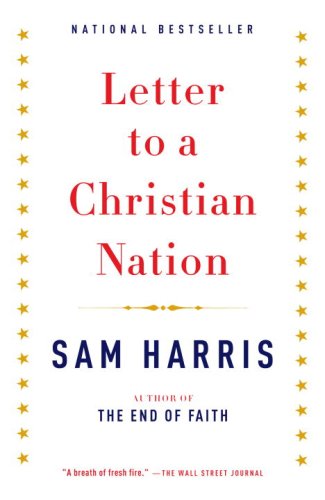
A review of Sam Harris: A Letter to a Christian Nation


Recently I began an interesting journey. I decided to start surveying some of the better (or at least more popular) anti-Christian literature. I don’t mean that in a derogatory way, but rather literature that challenged my world view, and hopefully would challenge some of my presuppositions. I had two basic reasons for this: one was I was beginning to assemble a basic apologetics curriculum and another was I’ve long felt a need to engage literature “from the other side”. When apologetics is done “safely”, (as in, no real interaction with the other side), it often results in straw men.

So I made a journey (literally) to the local bookstore and picked up a number of best sellers / recommended texts. My first entry into this interesting territory was a short little book by Sam Harris, Letter to a Christian Nation.


Sam Harris is a student of neurology, and often appears in debates and interviews concerning his atheism. In front of an audience, Harris appears articulate, quiet, restrained, and thoughtful. However, in Letter to a Christian Nation, he takes out quite a different tone. He is clearly very upset with religion in the western world, especially America. Although a good deal of his attack is focused on Christianity, especially the Christianity of the pew, he often lumps together most religions into this same boat, so more accurately his attack is against God believers.


Before moving into a critique, I want to begin by pointing out some important strengths of this book. First, Harris wants to direct the majority of his attack against more conservative Christianity (and by implication more conservative forms of religion). He dismisses more “liberal” Christianity by rightly pointing out that these questions are about black and white, and not the "greyness" of liberal Christianity. The Bible is true or it is false, Jesus’ life, death, and resurrection are true or they are false. This is a very honest and helpful beginning point for these discussions. It sounds like Harris does spend some time interacting with liberal Christianity elsewhere, but it does remove it from this “battlefield”.

Another strength of Harris’ work is his approach to morality. I have not read much in philosophy, but I do know that the question of morality is one of the most important of the atheist. It is not just that a purely Darwinian ethic is severely lacking, but it can quickly take on a clearly immoral structure rather quickly. After all, survival of the fittest is most certainly not a gentleman to species. Harris attempts to build a moral system that is entirely objective. From other interviews, I know that as a neurologist he is especially interested in defining morality at the level of the brain. In A Letter, Harris does briefly outline his (at least current) view of morality. It is really just a form of utilitarianism: morality is the pursuit of real happiness in self and others. If your actions promote happiness, they are moral.

The biggest problem here is that Harris’ morality is subject to the same basic critiques of a utilitarian ethic: how do you define happiness? How can a finite being know what actions will really and truly lead to happiness (such decisions require some form of omniscience). In any case, it is still encouraging to see Harris investing a lot here. It demonstrates a clear recognition of an important weakness of atheism, and he certainly does his best to find a solution.


Harris is very upset. This much is clear, if not from the title of the book, then from the first paragraph. He is responding to what he sees as a “moral and intellectual emergency”. He sees conservative Christianity as something that is contrary to the pursuit of a civil society, something that is contrary to the pursuit of scientific knowledge, something that is contrary to any kind of critique and discussion, and something that is fundamentally contrary to any sense of reason. At a basic level though, Harris is reacting to the classic “problem of evil”. This problem basically stated is how can God be all powerful and all good, yet he can allow such rampant (and seemingly pointless) evil to exist? I’m pretty sure this is one of the most powerful arguments against the Christian God, (both as a polemic and conviction). Harris not only sees the Christian God as evil, but possibly any god as evil, and those who follow him as either evil or very close to it.

I am pretty sure Harris is focusing his barrage not at the Christian academy, but at “popular Christianity, the religion of the pew. It is here that he sees rampant ignorance, blind faith, and moral indifference to both suffering that presently exists, and suffering that is a result of Christianity. The problem is, Harris is not really interested in dialogue, but with simply describing what he sees as a dangerous absurdity. Harris is venting at the Church, there is no charity here towards the other side. If you believe in God, you clearly are happy with the thought of genocidal piety, you clearly promote ignorance, you are clearly opposed to science and would rather sustain a blind faith, and you are only a few steps away from the logical conclusion of conservative religion: radical Islam or Nazism.

I do not mean to be equally unfair to Harris, but I did not walk away from this book with a perception that this was a fair entry in the dialogue over various issues such as ID vs. Darwinism, religious tolerance, the ethics of stem cell research, or any other issue that was touched on. Instead, he presents only the barest amount of evidence for his side, and then proceeds with a barrage of accusations on how absurd the conclusions are of the Christian. This isn’t a letter about discussion religion, but a letter about his perception of the logical conclusions and implications of Christianity. This point cannot be overstated. Harris is not trying to make the case that you should convert to atheism, (although I’m sure it would make him happy), but rather is making the case that western civilization is in serious danger because of theism. If we want to continue growing as a rational species, then we need to discard the destructive, intolerant, and profusely ignorant institution of religion.


How does a Christian respond to this?

I think the beginning of a Christian response requires a number of things. The first is the humility to admit that yes, there are plenty of professing Christians (whether real or not) who believe a lot of stupid things. Illiteracy and ignorance is not a problem that is unique to the church, but is something that is running rampant in the entire western world.

A second beginning point is to make some important distinctions. The first is that not all faith is blind faith. In fact, a good number of Christians talk about faith more in the sense of reasonable faith. There is a big difference between believing in the tooth fairy and believing in God. One is pure fantasy (encouraged by deceitful parents); another is the result of personal experience and rational argument. (Note: rational does not = materialist).

Another important distinction is between different religions. You cannot lump together all “theists” into one category. Islam is very different than Christianity, and both are very different than the eastern religions. Harris made such a distinction between conservative and liberal Christianity, but seems to have little problem treating the conservative Christian and the radical Muslim as the same. This isn’t just a point of doctrine, but worldview and what rational arguments are used.

A third distinction is within the church: there are moderate Christians in the pew, and radical Christians. The latter might be willing to blow up an abortion clinic, the former find that appalling. In a similar vein, there is a distinction between the educated Christian scholar and the average Christian in the pew. Many Christians are very concerned with educating the church better. There are a lot of important movements within the church. It is unfair to judge the church by the reductionism or misunderstandings in the pew, just as it would be unfair to judge atheism by a high school level education.

A final beginning point is recognizing our need for better dialog. One of Harris’ primary points is that Christians do not tolerate some important questions being asked about their belief. This is not a unique claim to Harris, Dawkins and others love to use this as a trump card. After all, the epitome of ignorance is a blind refusal to listen to a challenging question. But if the debate over ID in the last few years has revealed anything, it is that many atheists are in the same boat. Positing the limits of science, or questioning its all-inclusive rule is clearly not allowed. So we both need to listen to some of these arguments.


But those are just a beginning. A Christian response must include a defense of what we do believe. Christianity is not about intolerance, oppression, ignorance, or promoting suffering. The Bible is most certainly not about this. You can quote a few passages out of the Old Testament and try and make that case, but with further investigation it is abundantly clear that this is not true. Even if many Christians today have some wrong understandings of faith, one only has to look at history to see that when Christianity is done right, it produces a bountiful crop.

But further even is that there are a lot of very rational reasons for why Christianity is true. In fact, this is why Christianity stands apart from other world religions: we are primarily a historical faith. We are not concerned with people adopting arbitrary doctrines that must be accepted by blind faith. We are concerned with a divine man in history. Paul put it best in 1 Cor. 15: If Jesus did not rise from the dead, our faith is in vain. This is a bold claim. This means that if the historical basis of Christianity fails, then the whole house of cards collapses.

Harris’ critique looses a lot of its force when one is simply confronted with the basic facts of what Christianity does stand for. And I certainly do not blame him for misunderstanding, because there are a lot of “Christians” out there muddying the water. Further, throughout history people have done a lot of bad things in the name of religion, even in the name of Christianity. I do not like hearing how one side or the other is responsible for Nazism: Hitler had his own agenda and used science, religion, and principles of atheism to serve his own purposes. Because people abuse a position does not mean that position is wrong or should be avoided.

The question then should be does Christianity make sense of reality? The problem for Harris is that he limits the boundaries of what is knowable to the realm of science. Only those things we know from our five senses and only those things from a naturalistic science are considered “fact”, “reasonable”, or “true”. This is an important philosophical conclusion that must be examined further: are there things that are true and real that are outside of science? Does reason extend beyond science? Does a purely naturalistic view of the world even make sense? These are not questions Harris addresses, but rather assumes. And these are key questions where Christianity and atheism diverge.


More importantly though, in reading this book I realized that both atheists and theists are guilty of “preaching to the choir”. We may walk away having felt better about ourselves, and although our sales might be up, very little is accomplished. Others aren’t educated, because they weren’t really exposed to the real arguments of the other side. Further, little if any dialog takes place because we weren’t interested in dialog to begin with.


But hopefully what we are all interested in is truth. At some basic level, this must be rational truth, (because any other truth simply doesn’t make sense). The pursuit of this truth is not helped by name calling and drawing wild and unlikely implications from one view. We need to examine the arguments and see what makes the best sense of the world around us. It is interesting and ironic that the beginning of my journey started with this book. I was hoping to better educate myself, but I encountered something very different. I had to look elsewhere to find a better presentation of Harris’ views.

Read more...

Sunday, December 21, 2008

Three sides of balance

Philosophy usually involves deriving connections or making important distinctions. Bad philosophy is usually over simplifying things or trying to connect unrelated things. Hopefully this will be more of the former than the latter.

It has struck me that the church, in all her beauty, tends to find itself out of balance. Balance is a fun concept, because it presupposes that there is some sort of tension between two or more “poles”, and that it is very easy to teeter towards one or another.

One such area in the church I think is the balance between heart, mind, and action. A phrase that I’ve used a couple of times that I think gets at this is we need more churches with the heart of a charismatic, the mind of a reformed, and the action of an emergent. This is rather simple of a point, but I’ll still unpack it a bit.


A lot of good churches seem to be real strong at one of those three, but rather weak at the others. A really rare church might be strong in one, decent in another, but still weak in the third. I think it is a healthy and biblical goal to pursue a balanced strength in all three.

The heart of a charismatic is pretty straightforward. I naturally am a very reserved and introverted person, but I have experienced a lot of stretching and growth when in the presence of more charismatic corporate worship. There is a sense of passion, love, joy, and desire for God that is so thick and authentic it is almost palpable.

In the same way, the mind of a Reformed is often very developed and biblical. I have always been both humbled and impressed with the amount of biblical literacy in Reformed churches, and how deeply some of the average members can interact on theological discussions. More importantly, and uniquely, it seems that most people in the church have a strong sense of biblical literacy, and a well developed ability to think well within biblical categories.

The latter is an area I’ve experienced the least, but still cannot help but be impressed with and respect. The reality is that a lot of churches don’t “do” very much outside of their 2-3 services a week and a few small ministries. It is the younger, more emergent churches that seem to more often emphasize missional living. They often are the ones with a deep passionate heart for suffering, the poor, and social injustice in the world.

I need to qualify this last point some. I do not think that a majority of American churches have lost the call of the heart of evangelism or missions. In my limited experience, I haven’t seen evidence to this effect (although I have seen a few churches that invested more time and money into the church “experience” than these). What I am stressing is the deep heart ache for the suffering and injustice in the world. The Gospel isn’t just about spiritual salvation, but Jesus’ kingdom is about a holistic redemption of humanity: spirit and body. Further, the promised kingdom Jesus brought was inaugurated in the context of healing sickness and undoing injustice, both were two key areas of promise in the Old Testament. I think that there is a key aspect of living the Gospel is to have a real concern for these things, certainly Jesus did. Further, I do think many Christians (including myself) have fallen into the trap of thinking missions work is for the missionary, and evangelism is for the evangelist. Even though most of us know that these are both supposed to be regular aspects of every Christian’s daily life, at some sub-conscious level we’ve relegated these roles to the “professionals”.

These three absolutely must be the strength of the church, the biblical evidence should be clear enough. I don’t exactly see them as “in tension” with one another, nor can I think of a good structure to explain why these three seem to be opposed to one another, but in some way at some level I think they are.

Naturally having a lot of one and less of the others can lead to abuse. A lot of charisma and not a lot of action / mind can lead to very subjective notions of truth, to a “pick and choose” theology that has no internal coherence, and can also lead to some of the more sensationalized styles of worship where there is lots of visual/auditory production that has strong emotional impact, but very little substance.

If you know me at all, you know that I am very much not Reformed theologically. There are several strengths to it, but I don’t feel that they capture all of the biblical themes in a balanced way. The danger of only having a developed mind can result in a “dead” spirituality where there is lots of understanding, but little spiritual / practical benefit. It can also lead to a very detached theology, where one’s understanding of scripture and God only stimulates the mind and has no real relation to reality, nor does it really affect change in people. Another danger is that an singularly developed mind might try to impose “grids” of thought to bring exact definition to concepts in scripture that are less defined (such as the triunity of God and the relationship of sovereignty and responsibility).

Finally, only having a developed action can lead to good work without purpose. The social Gospel is a prime example of this. Doing the work of the Gospel as divorced from the Gospel is certainly not a good thing. Praxis is not an end in itself: action is how we can be beacons of light to the world, living the Gospel and seeking God’s kingdom. It is very easy to loose sight of this without the balance of the other two.


I’m not sure if there are other models that this triad can fit over, but in the end I think all churches need to always be undergoing the process of examining ourselves and pursuing growth and strength in all three of these. With a lot of things, balance can be difficult to achieve, but when it is found, not only can one be healthier, but fruitfulness and a more holistic outlook and self can be achieved. In both the corporate body and our individual lives we must certainly glorify God in the areas we are strong at, but I think we also glorify God by pursuing him and pursuing growth in those other areas we are week in.

Read more...

Christmas


Tis the season for gift wrap, large adorned trees, long lines, green and red, nativity scenes, church plays, and spectacular displays of lighting genius. Children and Hollywood dream of Santa Claus in many different renditions, Parents sneak away to hide presents, and people stand under mistletoe expectantly. For many Christmas has been special since childhood. It’s not just about receiving nice shinny new toys, but giving to others and good will. Even though we live in southern California most of us can appreciate the beauty and warmth of a white Christmas. Christmas is a time of beauty, anticipation, rejoicing, and time to share love with those around you.

But with so many positive symbols and feelings associated with this glorious holiday, we often can forget the true meaning of Christmas. We easily get buried in all the icing, and forget about the substance, the reality, the truth about why we are celebrating. Even for Christians, we sometimes get caught up in these “myths” about Christmas, and lose sight of the true real meaning of Christmas. As we prepare to celebrate this glorious holiday season, it is important to focus our attention on the truth of Christmas, and not just on the symbols and traditions that we are surrounded with. So what are some of our “myths” about Christmas?


1) The first myth is also one of the most popular symbols of Christmas in the western world: Santa Claus. It is doubtful that many adults would attribute the true meaning of Christmas to the fairy tale of Santa Claus, but he certainly does occupy the majority of our culture’s attention during Christmas. But was there a real Santa Clause? Or is it entirely myth?

Most likely, the story of Santa Claus begins with a famous Bishop of Asia Minor in the 4th century. St. Nicholas was widely renowned for his generosity and good works, for his kindness especially to the poor and children. As the stories about St. Nicholas passed through the ages, many churches were dedicated to his memory, and he became known in the western churches as the patron saint of children.

Although the stories surrounding St. Nicholas did develop some of their own mythology, (such as his ability to work miracles), the contemporary image of Santa Claus most likely began with the famous poet Clement Moore, who penned the classic work “Visit from St. Nicholas” (“Twas’ the night before Christmas”) in 1822. This began the mythos of Santa Claus, his reindeer, and his twinkling eye. This image was further developed in 1863 by the cartoonist Thomas Nast.
We can certainly see how the traditions of Santa Claus and St. Nicholas are rooted in the celebration of generosity and kindness. Unfortunately the popular conception has distorted this into “being good” in order to receive gifts that meet our wildest dreams. St. Nicholas was about giving, Santa Claus is about receiving.


2) In a similar vein, the second myth is that Christmas is that it is all about presents. This myth is all too commonplace, after all the Christmas season is the favorite of retail markets. The pressure can be overwhelming to find the right present for those special to you, especially worse for those who procrastinate till the night before. So much of what we focus on is about the gifts given, but what is the story behind this tradition?

The practice of gift giving certainly has its roots in the traditions of St. Nicholas, who’s generosity included giving gifts to children. The practice itself probably originated in the 15th century, and was commonly practiced by the end of the 18th century. A theological basis for gift giving is the reminder of God’s greatest gift of his son. There is also a possible allusion to the Magi who brought gifts from the east to Jesus’ birth.

One of the reasons the Puritans were opposed to celebrating Christmas was because gift giving tended to make Christmas more of a secular holiday about friends and family instead of about celebrating the birth of Christ. While protesting the celebration of Christmas is an extreme reaction, their critique is certainly deserving. In our materialistic culture, Christmas (or “the holidays”) is entirely about purchasing lots of gifts for others, and receiving lots of new “toys”.


3) Third, Christmas is full of traditions and symbols. But what is the origin of Christmas? Why do we celebrate on the 25th? Despite the limited data available in Scripture, early Christians chose to celebrate it on December 25th as early as the 3rd century.

One theory is that it was chosen to correspond with the Roman celebration of the winter solstice: “day of the birth of the unconquered sun”. This Roman festival celebrated the rebirth of the sun, as the sun reverses its southward movement, proving that it is “unconquered”. The reason early Christians would have chosen this date is the parallels with the significance of Christ:

"O, how wonderfully acted Providence that on that day on which that Sun was born...Christ should be born" -Cyprian.
"They call it the 'Birthday of the Unconquered'. Who indeed is so unconquered as Our Lord...?"
-John Chrysostom.


A second theory is based on the early Christian association of the spring equinox with the date of creation. On the fourth day of creation God created light, and some early Christians possibly derived from this that Jesus was conceived four days after the spring equinox, on March 25. Consequently, he would have been born 9 months later on Dec. 25. Despite the ambiguity of the actual day of Jesus’ birth, the early Church chose to celebrate his birth on December 25 as an alternative to the pagan celebrations of the new sun: as a profound affirmation of the birth of the son who would bring light to the world.


4) Finally, what were the circumstances surrounding Jesus’ birth? Luke gives us the most vivid account. Mary and Joseph went to Bethlehem for the infamous census. Bethlehem was Joseph’s home town, and being in the line of David he certainly would have had a lot of family there. Unlike the popular conception, they most likely did not stay at an inn, but at a local family residence. Luke uses the term kataluma in 2:7, which more often refers to the place of lodging or dining area of a home, (such as in Luke 22:11, or Mark 14, note Luke’s use of a different term in 10:34 in the story of the good Samaritan).

Most Jewish homes at that time had two levels. People would sleep upstairs (usually the roof), whereas animals slept in the back of the lower level, (or a cave just outside). The image still evokes the humble circumstances of Jesus’ birth: Mary was in labor, but the upper area of the home was too full of relatives. The newborn Jesus was laid in a feeding trough in the back area of the lower level. These feeding trough’s were usually large hole’s dug in the ground.

----------------------------------

As Christians, the true meaning of Christmas is about Jesus Christ. But even though we celebrate such a profound truth for this holiday, it is very easy to get side tracked by all the festivities, purchases, and gatherings. It is important that we remind ourselves that Christmas is about celebrating the birth of our savior, the God-man Jesus who is the Messiah Christ that brings the peace of God. Peace is an important message, especially in an era of conflict and sin. Peace is the promised King bringing his kingdom of peace on earth. Peace is the promised Prophet coming to announce God’s intensions to save mankind from sin. Peace is the promised Priest coming to restore a broken relationship between God and humanity.

So this Christmas, let us not get caught up in the traditions and gifts. These are good things in their own right, but let us keep Jesus and his mission of peace at the center. Let us celebrate as a community God’s work of peace on earth through his son, the promised Messiah and author of peace, Jesus.

Read more...

Monday, December 8, 2008

Music Influences


Just been listening to some different styles of worship music today....

Worship genre has always been a bit of an issue for me... I rarely like most stuff musically. This poses a bit of a challenge being on a worship team. It certainly has forced me to grow in many ways....

For this blog I want to reflect on some of our "boundaries" in what is appropriate and inappropriate styles of music for corporate worship.


I think my biggest influence growing up (and even still) is much heavier music. Growing up I listened to a lot of grunge/alternative and some metal, and the last 10 years I've listened to a lot of prog rock. I've always wanted to bring this influence to worship, but have found very few opportunities because there is a lot of unspoken (and some spoken) opposition to this, especially in a church environment. (I'm certain ppl who like rap are in the same boat).

I've been listening to some Hillsong United today, (realizing that a lot of Biola's worship is from them) and I envy them... I can sense a clear influence of emo / indie styles, and can see how they've avoided falling strictly into those influences, but still utilizing them. I wish I could do this w/ my musical influences!

Its weird how we have these "traditions" of sorts of how we define boundaries for "acceptable" corporate worship styles... For more contemporary churches, the goal is something more like Hillsong, for more emerging churches, Hillsong United. I can respect qualities in both, but I'm not sure where these come from. I mean, why is it that almost everyone in the congregation reacts at a song that is pushing the edges of "acceptable", when certainly there is hardly consensus among their individual musical preferences? Where do these "notions" come from?

We could also try to define worship in a Biblical way first.... something like "music that stirs the body to a heart of reverential, authentic, fearful, and submissive worship of God as a community". (This is very much shooting from the hip). But even with that sort of definition, we really aren't setting up any boundaries for genre.

I'm sure cultural values play a roll here, but even those are more ambiguous than some might at first think. For example, we could make the point that genre could be distracting. But I can speak from personal experience that if your desire is to worship God, you can get over it. In fact I've heard many times that people being exposed to worship music "outside of their comfort zone" was actually a growing experience. The first few times I was at a black gospel worship service, I was very uncomfortable and turned off. But as I started to develop an appreciation for it (both for the musical skill and the great passion that the music stirred), I've found it to be one of my favorite genres of worship music.

I think a good case can be made that one important boundary is the emotions that the music stirs up. Some genres naturally stir up anger, which really doesn't have a place in a corporate worship experience. Awe, love, praise, joy, humility, even sorrow all have a place I think, because these are all right responses to God. This doesn't necessarily exclude a genre of music as worship, but it definitely limits some genres more than others.

Another good boundary is the degree of performance. Prog rock is very technical music, and having a 10m long instrumental in the middle of a worship set may be stepping across the line of watching the musicians and worshiping God. But this certainly does not mean worship music must be simple: in fact, I've seen several examples of Latin, jazz, and gospel worship sets that were very technical, but still maintained a very real worshipful environment.

I can appreciate that another boundary for some is something that has the widest appeal, something that positively affects the greatest percentage of the body. The problem here is that, often this criteria only produces bland music. I also think that there is a good place for taking people a bit outside of their comfort zones. After all, if we only want to worship God corporately when we are comfortable, could this not reflect a similar attitude in our spiritual lives? I don't think there is a necessary correlation here, but definitely a point worthy of some reflection. After all, how many Sunday mornings are already uncomfortably bland and comfortable?

I'm not sure if I've really come up with any conclusions, more just rambled a lot in this blog.... but I think at the very least, as worship leaders we need to strive to pursue excellence. After all, we are attempting to lead part of God's church in the very important act of offering praise to Him. Music is a tool, a medium, and the worship that flows through it must come from a genuine heart of worship that is already present. This means we need to pursue authenticity in our own lives of worship, but also excellence in wielding the tool of music.

The reality is our culture is saturated with media in all forms, and perhaps that is the reason that we respond so half heartedly to "bland" worship. Its a delicate balance, because its important to teach a true biblical heart of worship, but also use music to stir people's emotions to a point of worship. I'm not entirely sure what this looks like, but I suspect that challenging some of our assumptions about worship music and challenging people's comfort zones (in moderation) can help, at least they've helped me. Certainly finding a place where we can express worship to God through a wide variety of music is a good thing too. God is the source of diversity in our creation, and I doubt that he ever planned for there to be only one, exclusive form of response in musical worship.

Read more...

Friday, December 5, 2008

Approaching Theological Difficulties


Good theology is a difficult endeavor. After all, it is the assimilation of inferences from occasioned documents, (not to mention the historical distance involved). The authors themselves make a lot of assumptions about the knowledge of their respective audiences. It is understandable then that there are several important “tensions” that arise in theology between the various emphasizes of authors.

Today, I want to reflect on thinking more seriously about these tensions in our formulation of theology.


One great and classic example is our doctrine of the Trinity. Scripture is strongly monotheistic, and there is little evidence that the early church saw themselves diverting from this core Jewish belief. Yet, in the New Testament there is a clear distinction between the members of the Godhead, both in their action and in how they relate to one another. Another good example is the relationship of Christ’s humanity and divinity. The church recognized these as tensions early on, (as can be seen by the numerous councils and debates). With such central definition about the nature of God, the church took great care to preserve both “poles” of such tensions. In fact, whenever a particular theology would loose sight of this balance, it was quickly refuted as heresy.

Despite the countless pages of thinking recorded on these questions, no real solution is ever offered. No theological grid is able to be imposed on the poles of the doctrine of the trinity. The truths of scripture are taken at face value, and using principles of logic and reason within the context of scripture, boundaries are placed around these truths. The only theological “structure” that works seems to be the one that doesn’t actually solve how God can be both three and one, but only defines as closely as possible the barriers around those two truths that scripture allows. This isn’t an elegant process, but it really is all we have to work on.

The reality is that most doctrines about the nature of God fall short, because a finite being is attempting to define the infinite. God is beyond our perceptible logic. This does not mean he defies logic, because I believe that our notion of reason and logic are derived from the existence of God. After all, God did choose to reveal himself through scripture so that we might at least taste the smallest portion of his infinite nature, certainly enough to know Him and worship Him.

But what bugs me is this whole methodology seems to fall apart when we approach the sovereignty vs. responsibility question. Instead of taking the truths of scripture and trying to zero in and build boundaries around those truths, we try to contort those truths into one of several structures. What should remain “mystery” is fitted into something that is thoroughly logical (to a finite mind). These aren’t arbitrary (though sometimes they seem to be), but rather start with one set of propositions in scripture (such as God’s sovereignty) and work outward.

The reality is that just like the modalist or the docetist, the Calvinist has to redefine freedom in order to preserve his notion of sovereignty. Freedom is more an illusion created in order to meet their interpretation of several key passages about God’s sovereignty. Likewise, the Arminian tries to follow an interpretation of several key passages about the consequences of man’s free choices, but often has little to say about God’s sovereignty, and certainly there is not always a clear distinction made between actualized responsibility and merit.

This is a bit of a different question than the nature of the trinity, because it is inherently personal. It defines our relationship with God, and has far reaching implications. The doctrine of the trinity or the nature of Christ, while very important to our faith, do not have such radical personal effects. They are abstracted, only insofar as they deal with God himself and not specifically us, (though certainly they can affect how we view God and how we approach him).

The problem is further complicated by the fact that a lot of the discussion concerning sovereignty vs. responsibility includes a lot of basic questions to humanity: what is the nature of freedom, i.e. do we really make free choices, and to what degree to outside causes influence us? Even questions such as purpose and existence come into play here.

Here is my thought: is it possible to discard a lot of these structures and instead approach the issue in a similar way to that of the trinity and the nature of Christ? Can we take at face value the fact that God is fully sovereign over creation, but humans remain responsible for their free choices? Carson made the point that any Bible believing Christian must be a compatibalist, and in one sense I agree. If we define compatibalism as that God’s sovereignty is compatible with human freedom then absolutely, (this is not the philosophical definition of compatibalism).

But is it possible to operate this way? Can we begin the same way we begin with the Trinity: take the “basic” assumption of sovereignty being compatible with responsibility (after all both are assumed in scripture) and proceed to narrow in on how scripture limits these two? As attractive as this sounds to me, I seriously wonder if this is even possible with the issue of sovereignty and responsibility for several reasons.

First, there is just so much history of thought influencing our categories. It seems many inherently fall into one of the two camps in their thinking, in how they approach God, and in how they read scripture. This issue affects so much of what we understand in scripture that it can be difficult (if not dangerous) to radically rework the whole system. Great care must be taken to evaluate our own presuppositions, but also to make sure we aren’t throwing out the proverbial baby with the bathwater.

Second, this is dealing with a question of degrees of emphasis, whereas the doctrine of the Trinity was usually polarizing (at least in my understanding of things). I am not certain if this distinction changes the methodology, but it is certainly worth noting.

Third, such a method would be very hard to teach. People need answers that are relatively straightforward, but this method ends up asking more questions and avoiding neat distinctions. This is the greatest appeal of the Calvinist system of theology: it is relatively comprehensive, and it is very neat and organized.

Finally, it might be easy to end up with no real theology, just a collection of unconnected propositions. In an age when logical coherence is already a low priority for most people, this might just foster another grab bag of theological ideas from which people can pick and choose as they please. The reality is that there is no such thing as a Calminian, because both systems have directly opposed propositions. I heard one professor say once he thought that some biblical writers were more Calvinist and others more Arminian. This certainly is attractive, that both systems in some way describe God, but it is also disturbing because it certainly redefines (if not undermines) our understanding of Scripture’s unity.

All these problems are important, but I still wonder if such a method could ever work. Certainly there are important questions that would have to be resolved for it to work, and it would take a lot of work to resolve the implications of any results. But I think what is most important is that in however we do our theology, we always allow scripture to refine us. If even a few verses clearly teach something outside of our theology, then we must rework things. After all, all scripture is inspired and authoritative, and whatever theology we come up with should do the best justice to all of it, not as much as our system allows.

Read more...